Decide what you need to find out
Tell the technician whether you are investigating a no-start, checking an older battery before winter or assessing a recurring discharge. Include when the symptom happens and any charging, jump-starting or recent repair history.
This gives the test a purpose. A pre-purchase condition check and an investigation of an overnight electrical drain do not necessarily require the same work. Ask the workshop what it intends to assess before agreeing that the battery should be replaced.
Distinguish charge from health
VARTA's testing guidance separates state of charge from state of health and explains the importance of technology-appropriate testing. A voltage reading alone does not answer every condition question.
If you already have a reading, record the circumstances and give it to the workshop as supporting information. Avoid interpreting a single value without knowing the battery type, test procedure and any recent charging history.
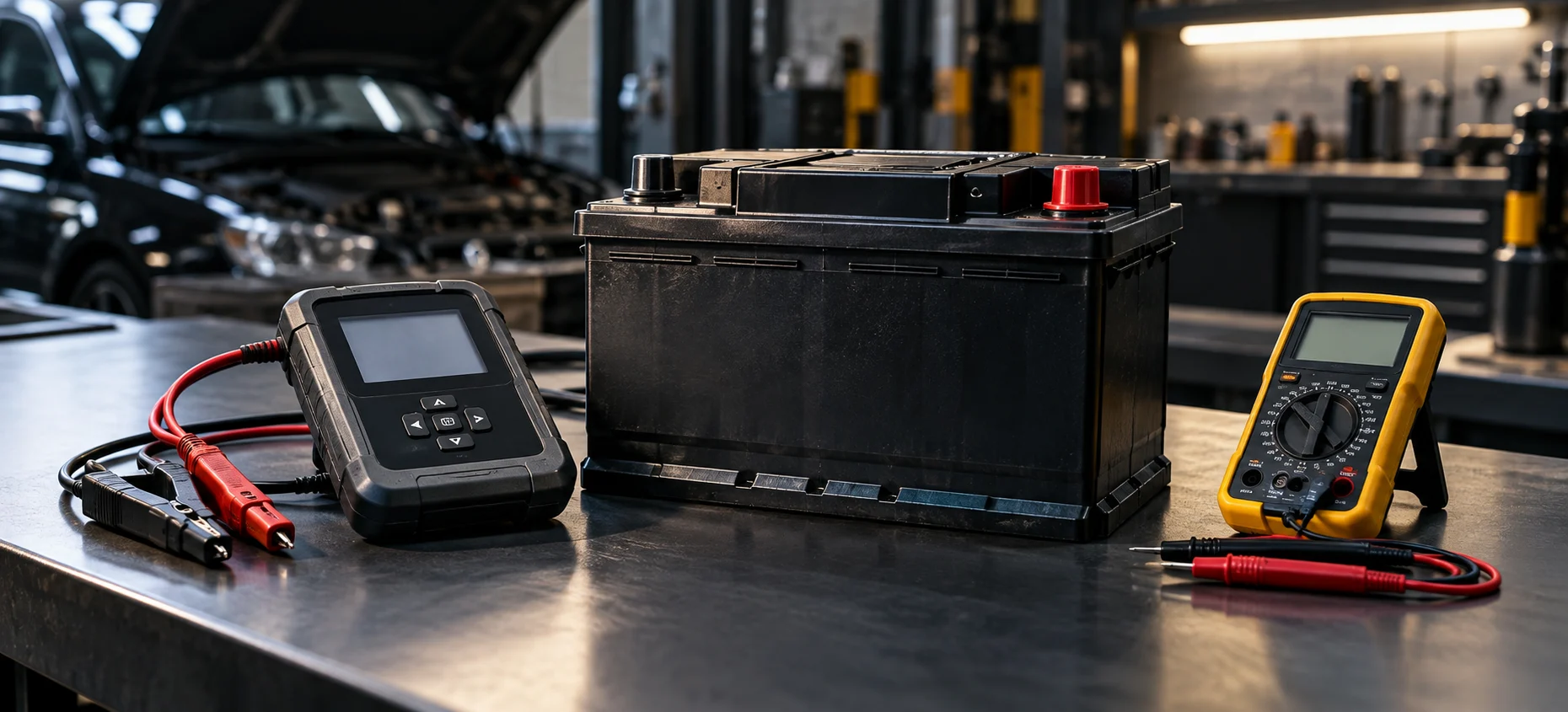
If you are learning how to test a car battery with a multimeter, start with the vehicle-approved measuring procedure. A voltage reading helps describe charge under the measurement conditions; it cannot by itself establish battery condition or the need for battery replacement.
Request a readable report
- Battery model, technology and label information used.
- Test result and any recommended charging or retesting.
- Whether connections or the charging system were assessed.
- The reason for recommending replacement, repair or further investigation.
Ask the technician to explain unfamiliar terms in plain language. You should be able to describe why the suggested next step follows from the findings, even if you do not own the diagnostic equipment.
Use the result to plan the work
If charging and retesting are recommended, confirm who will do them and when. If replacement is supported, request the correct specification and a complete installation quote. If the battery passes but the symptom remains, ask what investigation comes next.
Read battery or alternator problem for the wider diagnostic conversation and the voltage guide for interpreting meter readings. Keep the reports together, particularly if the fault is intermittent. A clear record helps prevent repeated purchases based on the same unexplained symptom.
For conventional automotive 12V batteries. Follow your vehicle manufacturer's instructions. Banner images are editorial illustrations.